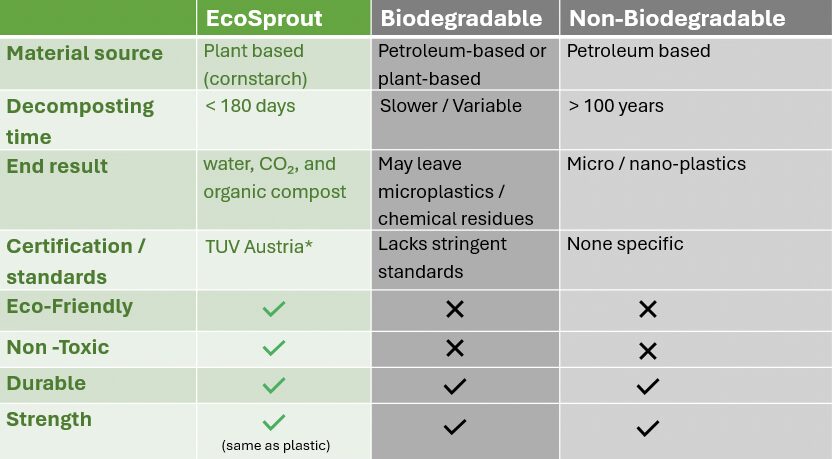
Feedstock
Renewable (corn starch, plant biomass)
Non-renewable (petroleum, natural gas)
Uses renewable resources, reduces dependence on fossil fuels
Carbon Footprint
~30–60% lower typical; up to ~85% with low-carbon production
High (≈2.5–3 kg CO₂e/kg)
Significantly reduces greenhouse gas emissions
Energy Use (Production)
Lower if optimized; depends on feedstock and processing
High (extraction, refining, polymerization)
Less fossil energy consumption
Biodegradability
Industrial / home compostable versions
Non-biodegradable; persists for centuries
Reduces long-term environmental pollution
End-of-Life Options
Composting, anaerobic digestion, some recycling
Landfill, incineration, mechanical recycling
More sustainable waste management options
Microplastic Pollution
Minimal if properly composted
Major contributor to ocean/soil microplastics
Reduced environmental contamination
Toxicity / Safety
Non-toxic; no petroleum residues
May release toxic monomers or additives
Safer for humans and ecosystems
Marketing / Branding
“Eco-friendly”, compostable, sustainable
Typically not renewable
Consumer appeal, potential carbon credits
Cost
Slightly higher, decreasing with scale
Usually lower
Trade-off: sustainability vs cost