Every day, we use plastic in ways that often feel unavoidable—from food packaging and shopping bags to containers, films and everyday products. Yet the convenience of plastic comes with a serious environmental cost. Traditional plastics are typically made from fossil fuels, can persist in the environment for decades or even centuries, and contribute to growing levels of waste and pollution.
At EcoSprout, we believe the goal should be bigger than simply finding a different type of plastic. We should first reduce our reliance on plastic wherever possible—and then, where plastic is genuinely necessary, choose better alternatives such as responsibly sourced bioplastics.
Reduce First, Replace Where Necessary
The most sustainable piece of plastic is often the piece we never use.
Before choosing an alternative material, businesses and consumers should ask a simple question: Do we need this packaging or plastic product at all?
Reducing unnecessary packaging, choosing reusable products, buying products with minimal packaging and designing products for reuse can all help reduce the amount of material entering the waste stream.
But eliminating plastic completely is not always practical. In applications where a lightweight, hygienic, durable or protective material is necessary, bioplastics can provide an important alternative.
What Are Bioplastics?
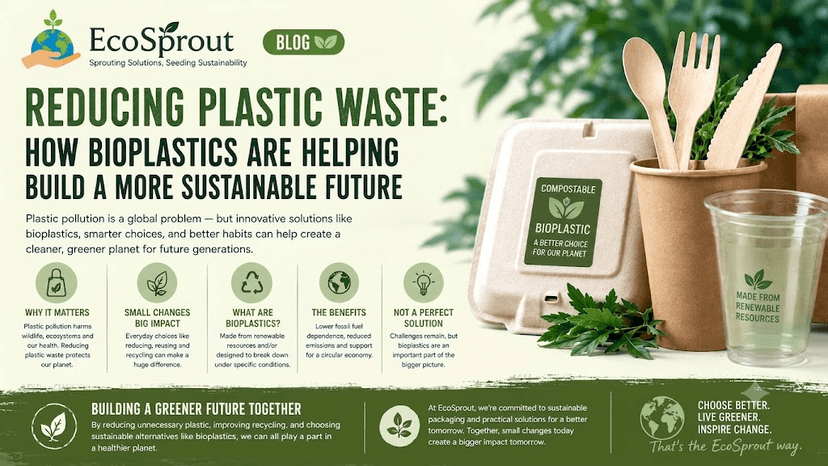
Bioplastics are plastics that are either bio-based, biodegradable, or both. Unlike conventional plastics, some bioplastics can be manufactured using renewable biological resources such as plants rather than relying entirely on fossil-based raw materials.
However, it is important to understand that not every bioplastic is automatically biodegradable, compostable or environmentally superior in every situation.
That is why choosing the right material—and understanding how it should be disposed of—is so important.
Why Make the Switch?
1. Reduce Dependence on Fossil Resources
Conventional plastics are largely produced from fossil-based feedstocks. Moving towards responsibly sourced bio-based materials can help diversify the raw materials used to manufacture plastic products and reduce dependence on finite fossil resources.
2. Rethink Single-Use Packaging
Single-use products are one of the clearest examples of where we need to rethink our relationship with materials.
Where reuse or elimination isn’t possible, appropriately designed bioplastic products can provide an alternative for certain applications. The key is to match the material to the product’s purpose and its end-of-life route.
3. Support a Circular Approach
The future of packaging shouldn’t be about producing, using and throwing away.
It should be about reducing, reusing, recycling and recovering materials wherever possible.
Bioplastics can form part of this transition, but they need to be introduced alongside better product design, responsible sourcing, effective waste management and clearer consumer education.
4. Encourage Better Business Choices
Businesses have enormous influence over the materials entering our economy. By reconsidering packaging choices, reducing unnecessary material and investigating credible alternatives, businesses can help shift demand towards more sustainable solutions.
Small changes across thousands of products can create a significant impact.
Bioplastics Aren’t a Magic Solution
It’s important to avoid treating bioplastics as a simple replacement for every conventional plastic product.
A product labelled “bio” or “compostable” does not necessarily mean it can simply be thrown into nature or a household compost bin. Some materials require specific industrial composting conditions, while others are designed to be recycled through particular systems.
The environmental performance of any material depends on factors including how it is produced, transported, used and disposed of.
That’s why the best approach is not “replace all plastic with bioplastic.” It’s “use less plastic, and use the right sustainable material when plastic is necessary.”
A Practical Path Towards Zero Plastic
For businesses and households looking to reduce their plastic footprint, the journey can start with a few straightforward principles:
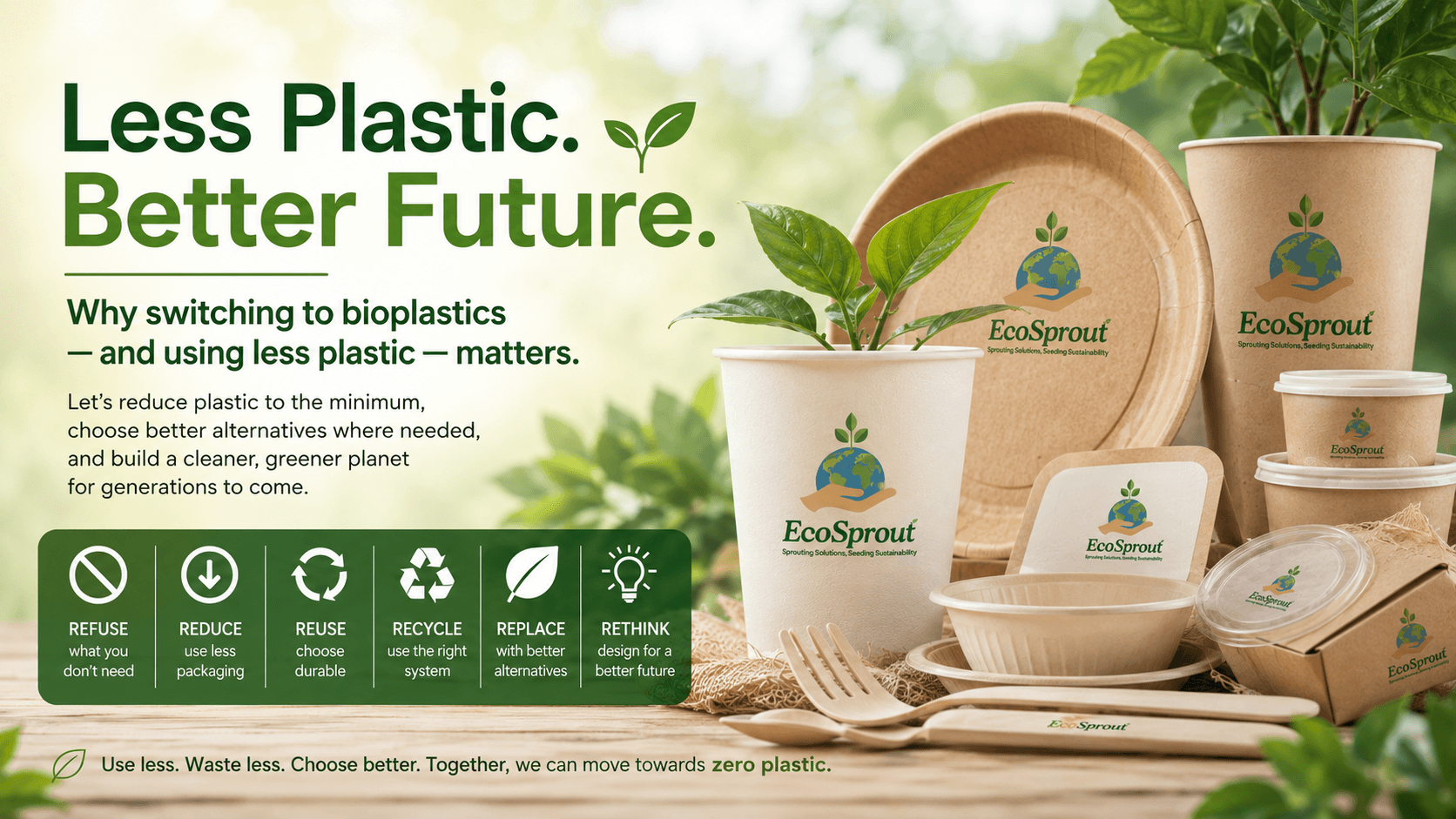
Refuse: Avoid unnecessary plastic wherever possible.
Reduce: Use less packaging and choose products with minimal material.
Reuse: Choose durable products designed for repeated use.
Recycle: Where plastic is necessary, ensure it enters an appropriate recycling system.
Replace: Investigate suitable bioplastics and other lower-impact materials for applications where plastic cannot reasonably be eliminated.
Rethink: Design products and packaging around their entire life cycle—not just their first use.
The Goal: Less Waste, Better Materials
The conversation around plastic needs to move beyond simply asking, “Which plastic should we use?”
We should be asking a more important question:
“Do we need plastic at all?”
Where the answer is no, eliminate it.
Where reuse is possible, reuse it.
Where another material provides a genuinely better solution, consider it.
And where plastic remains necessary, explore responsibly produced alternatives—including suitable bioplastics—while ensuring that their end-of-life journey is properly understood.
At EcoSprout, we believe meaningful environmental progress comes from making better choices at every stage. A future with less plastic is possible—and a future where the plastic we do need is designed with sustainability in mind is within reach.
The transition starts with one simple decision: use less, waste less, and choose better.