Plastic has become an essential part of modern life, but its convenience comes at a significant environmental cost. Every year, millions of tonnes of plastic waste end up in landfills, rivers, and oceans, where it can take hundreds of years to break down. As consumers, businesses, and governments seek more sustainable alternatives, reducing plastic waste has become one of the most important environmental challenges of our time.
One promising solution is the development and use of bioplastics. While they are not a silver bullet, bioplastics can play a valuable role in reducing our dependence on fossil fuel-based plastics and supporting a more circular economy when used responsibly.
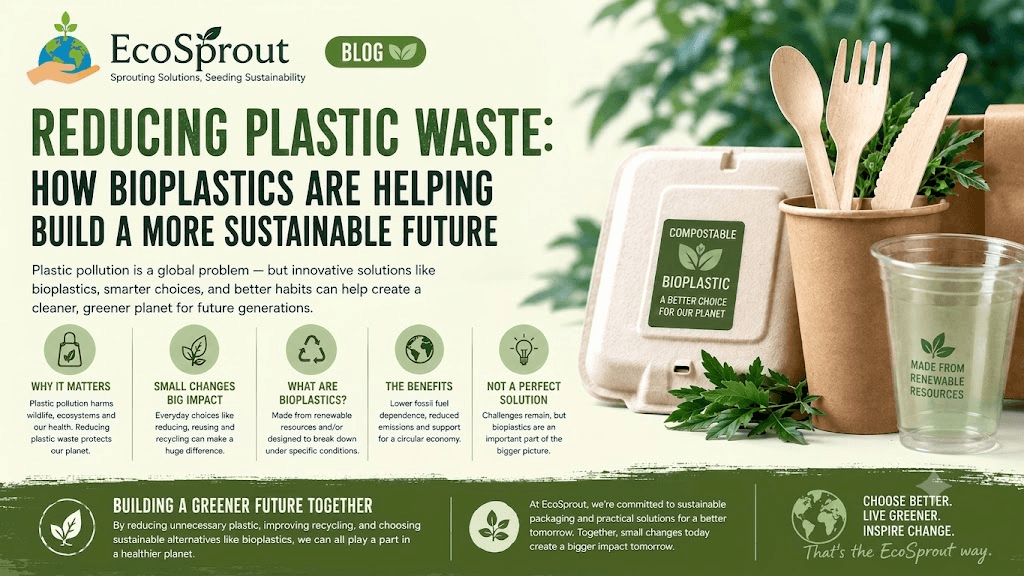
Why Reducing Plastic Waste Matters
Traditional plastics are made primarily from petroleum, a finite resource. Their durability makes them useful for countless applications, but it also means they persist in the environment for decades or even centuries.
Plastic pollution affects ecosystems worldwide by:
- Polluting oceans, rivers, and natural habitats.
- Harming wildlife through ingestion and entanglement.
- Contributing to greenhouse gas emissions throughout their lifecycle.
- Breaking down into microplastics that are increasingly found in soil, water, food, and even the human body.
Reducing unnecessary plastic use is therefore one of the most effective ways individuals and businesses can lower their environmental impact.
Small Changes Make a Big Difference
Reducing plastic waste doesn’t always require dramatic lifestyle changes. Everyday decisions can collectively have a significant impact, such as:
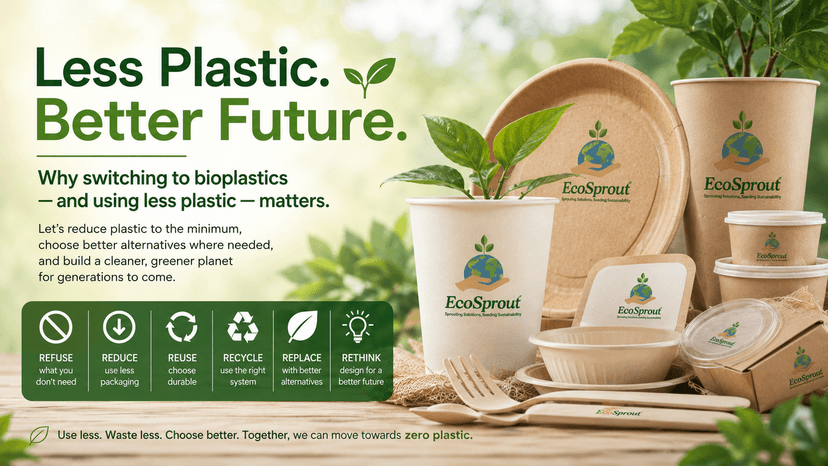
- Choosing reusable shopping bags and water bottles.
- Avoiding unnecessary single-use packaging.
- Purchasing products with recyclable or compostable packaging where appropriate.
- Supporting businesses committed to sustainable packaging solutions.
- Recycling correctly to reduce contamination.
Businesses also have an important role to play by redesigning packaging, improving material efficiency, and investing in innovative alternatives.
What Are Bioplastics?
Bioplastics are a broad category of materials that are either:
- Bio-based, meaning they are made wholly or partly from renewable resources such as corn starch, sugarcane, or cellulose.
- Biodegradable, meaning they can break down under specific environmental conditions.
It’s important to understand that these terms are not interchangeable. Some bio-based plastics behave much like conventional plastics and are recyclable, while some biodegradable plastics require industrial composting facilities to decompose effectively.
Understanding the differences helps consumers make informed choices rather than assuming all “plant-based” plastics will naturally disappear in the environment.
The Benefits of Bioplastics
When carefully selected for the right application, bioplastics offer several environmental advantages.
Reduced Reliance on Fossil Fuels
Many bio-based plastics are manufactured using renewable plant materials instead of petroleum, helping reduce dependence on finite fossil resources and often lowering carbon emissions during production.
Lower Carbon Footprint
Life-cycle assessments show that many bioplastics can produce fewer greenhouse gas emissions compared with conventional plastics, particularly when renewable energy and sustainable feedstocks are used.
Supporting the Circular Economy
Some bioplastics are compatible with recycling systems, while others are designed for industrial composting. Used alongside effective recycling and waste management, they can contribute to a more circular approach to materials rather than the traditional “make, use, dispose” model.
Are Bioplastics the Perfect Solution?
The simple answer is no—but they are an important part of the solution.
Bioplastics still face several challenges:
- Some require industrial composting facilities to break down properly.
- Inappropriate disposal can contaminate recycling streams.
- Sustainable sourcing of agricultural feedstocks is essential to minimise impacts on land and water resources.
- Not every product is suitable for bioplastic alternatives.
Experts increasingly agree that reducing plastic waste requires a combination of approaches—including reducing unnecessary packaging, increasing reuse, improving recycling infrastructure, and using better materials where appropriate. Bioplastics work best as part of this broader strategy rather than as a standalone replacement for all conventional plastics.
How Businesses Can Lead the Way
Consumers are becoming increasingly conscious of the environmental impact of the products they buy. Businesses that invest in sustainable packaging, responsibly sourced materials, and transparent environmental practices are helping to drive meaningful change.
Whether it’s replacing traditional packaging with suitable bioplastic alternatives, reducing excess packaging, or encouraging customers to recycle correctly, every improvement contributes towards reducing plastic pollution.
Innovation in materials science continues to develop new generations of bioplastics with improved performance, recyclability, and environmental outcomes, making sustainable packaging more accessible than ever before.
Building a Greener Future Together
There is no single solution to the global plastic waste problem. However, by reducing unnecessary plastic use, improving recycling, embracing innovation, and adopting sustainable alternatives like bioplastics where they make sense, we can significantly reduce our environmental footprint.
At EcoSprout, we believe sustainability is built through practical, informed choices. Every reusable product, every piece of thoughtfully designed packaging, and every step towards reducing plastic waste contributes to a cleaner, healthier planet for future generations.
Together, small changes today can create a much bigger impact tomorrow.