- 1The Growing Crisis of Plastic Pollution
- 2How Plastic Pollution Damages Oceans
- 3Rivers: The Highways of Plastic Waste
- 4The Hidden Impact on Lakes
- 5The Threat of Microplastics
- 6Consequences for Marine and Aquatic Life
- 7Why This Matters to Humans
- 8Solutions for a Cleaner Future
- 9EcoSprout’s Commitment to Environmental Protection
- 10Final Thoughts
Water is the foundation of life. From vast oceans and flowing rivers to tranquil lakes, aquatic ecosystems support countless species, regulate the climate, and provide essential resources for communities worldwide. However, one of the greatest environmental challenges of our time—plastic pollution—is rapidly degrading these precious water bodies and threatening the survival of marine and freshwater life.
The Growing Crisis of Plastic Pollution
Every year, millions of tons of plastic waste enter the environment. Much of this waste eventually finds its way into rivers, lakes, and oceans through improper disposal, littering, stormwater runoff, and inadequate waste management systems. Unlike organic materials, plastics do not naturally decompose. Instead, they break down into smaller fragments known as microplastics, which can persist in the environment for hundreds of years.
The consequences of this growing plastic burden are devastating, affecting ecosystems, wildlife, water quality, and even human health.
How Plastic Pollution Damages Oceans
Oceans are often the final destination for plastic waste. Floating bottles, bags, fishing nets, packaging materials, and other debris accumulate in marine environments, creating enormous garbage patches and polluted coastlines.
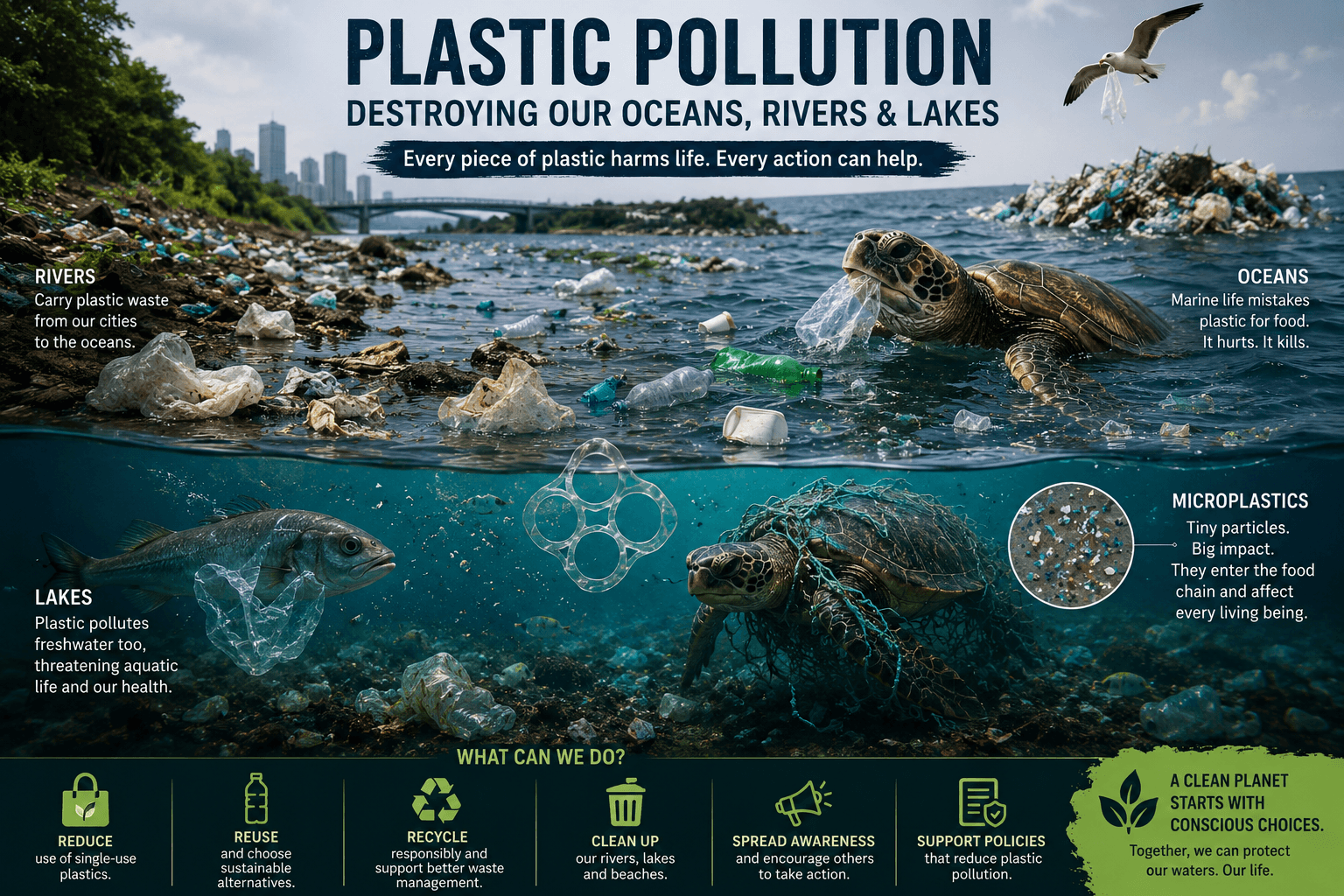
Marine animals frequently mistake plastic for food. Sea turtles often consume plastic bags, confusing them with jellyfish. Seabirds ingest plastic fragments, while whales, dolphins, and fish unknowingly consume plastic particles. This ingestion can cause internal injuries, starvation, digestive blockages, and ultimately death.
Plastic waste also damages critical marine habitats such as coral reefs, seagrass beds, and mangrove ecosystems. These habitats provide shelter, breeding grounds, and food sources for countless marine species. When covered or entangled by plastic debris, their ability to support life is severely compromised.
Rivers: The Highways of Plastic Waste
Rivers play a critical role in transporting plastic waste from cities and communities to larger water bodies. Unfortunately, they are also heavily impacted by pollution themselves.
Plastic litter accumulates along riverbanks and within waterways, disrupting natural water flow and increasing the risk of flooding. Aquatic organisms living in rivers, including fish, amphibians, and insects, face constant exposure to plastic debris and microplastics.
As plastics break down, harmful chemicals can leach into the water, affecting water quality and threatening both wildlife and human populations that depend on rivers for drinking water, agriculture, and recreation.
The Hidden Impact on Lakes
Lakes may seem isolated from the ocean pollution crisis, but they are equally vulnerable. Urban runoff, recreational activities, and nearby waste disposal practices introduce significant amounts of plastic into freshwater ecosystems.
Plastic waste can accumulate in lake sediments, shorelines, and surface waters. Fish and other freshwater species consume microplastics, which then move through the food chain. Over time, these contaminants can alter ecosystem balance, reduce biodiversity, and compromise the health of aquatic habitats.
Many lakes also serve as important sources of drinking water. The presence of microplastics in freshwater systems raises growing concerns about long-term impacts on human health.
The Threat of Microplastics
One of the most alarming aspects of plastic pollution is the spread of microplastics—tiny plastic particles smaller than five millimeters.
Microplastics originate from the breakdown of larger plastic items, synthetic textiles, personal care products, and industrial processes. Because of their small size, they are easily consumed by plankton, shellfish, fish, and other aquatic organisms.
Research has found microplastics throughout marine and freshwater environments, from surface waters to deep ocean trenches. These particles can absorb toxic pollutants and transport harmful chemicals through food webs, affecting species at every level of the ecosystem.
Consequences for Marine and Aquatic Life
Plastic pollution impacts nearly every form of aquatic life:
- Sea turtles become entangled in discarded fishing gear and ingest plastic debris.
- Fish consume microplastics, which can affect growth, reproduction, and survival.
- Seabirds mistake plastic fragments for food, leading to malnutrition and death.
- Coral reefs suffer physical damage and increased susceptibility to disease.
- Marine mammals face injury, entanglement, and poisoning from plastic waste.
- Freshwater species experience habitat degradation and reduced water quality.
As biodiversity declines, entire ecosystems become less resilient and more vulnerable to environmental changes.
Why This Matters to Humans
The effects of plastic pollution extend far beyond wildlife. Healthy rivers, lakes, and oceans provide food, livelihoods, recreation, and climate regulation for billions of people.
Contaminated waterways can impact fisheries, tourism, and local economies. Microplastics have also been detected in seafood, drinking water, and even the air we breathe, highlighting the interconnected nature of this environmental challenge.
Protecting aquatic ecosystems is not only about saving wildlife—it is about safeguarding the future of human communities as well.
Solutions for a Cleaner Future
Addressing plastic pollution requires collective action from individuals, businesses, governments, and communities.
Some key solutions include:
- Reducing single-use plastic consumption.
- Promoting reusable and sustainable alternatives.
- Improving waste collection and recycling infrastructure.
- Supporting river and beach clean-up initiatives.
- Encouraging responsible product design and packaging.
- Raising awareness about plastic pollution and its impacts.
- Advocating for stronger environmental policies and regulations.
Every action, no matter how small, contributes to reducing the flow of plastic waste into our waterways.
EcoSprout’s Commitment to Environmental Protection
At EcoSprout, we believe that protecting our rivers, lakes, and oceans is essential for a sustainable future. By promoting environmental awareness, responsible consumption, and eco-friendly practices, we can help reduce plastic pollution and preserve aquatic ecosystems for generations to come.
The fight against plastic pollution is a shared responsibility. Together, we can create cleaner waterways, healthier ecosystems, and a thriving planet where both people and wildlife can flourish.
Final Thoughts
Plastic pollution is one of the most pressing environmental challenges facing our planet today. Its impact on oceans, rivers, lakes, and aquatic life is profound and far-reaching. By making conscious choices, supporting sustainable solutions, and taking collective action, we can help reverse the damage and protect the world’s precious water resources before it is too late.