- 1What Are Traditional Plastics?
- 2What Are Bioplastics?
- 3Traditional Plastic vs Bioplastic: A Side-by-Side Comparison
- 4How Plastics Contribute to Carbon Emissions
- 5How Bioplastics Help Reduce Carbon Emissions
- 6However, Bioplastics Are Not a Perfect Solution
- 7The Bigger Picture: Reducing Carbon Emissions in Materials
- 8Conclusion
Plastic has become one of the most widely used materials in modern life due to its durability, low cost, and versatility. However, its environmental impact—especially its contribution to carbon emissions and long-term pollution—has driven innovation in more sustainable alternatives like bioplastics. For brands like EcoSprout, understanding the difference between these materials is essential for making more environmentally responsible choices.
This article breaks down how traditional plastics and bioplastics differ, and how each affects carbon emissions and climate change.
What Are Traditional Plastics?
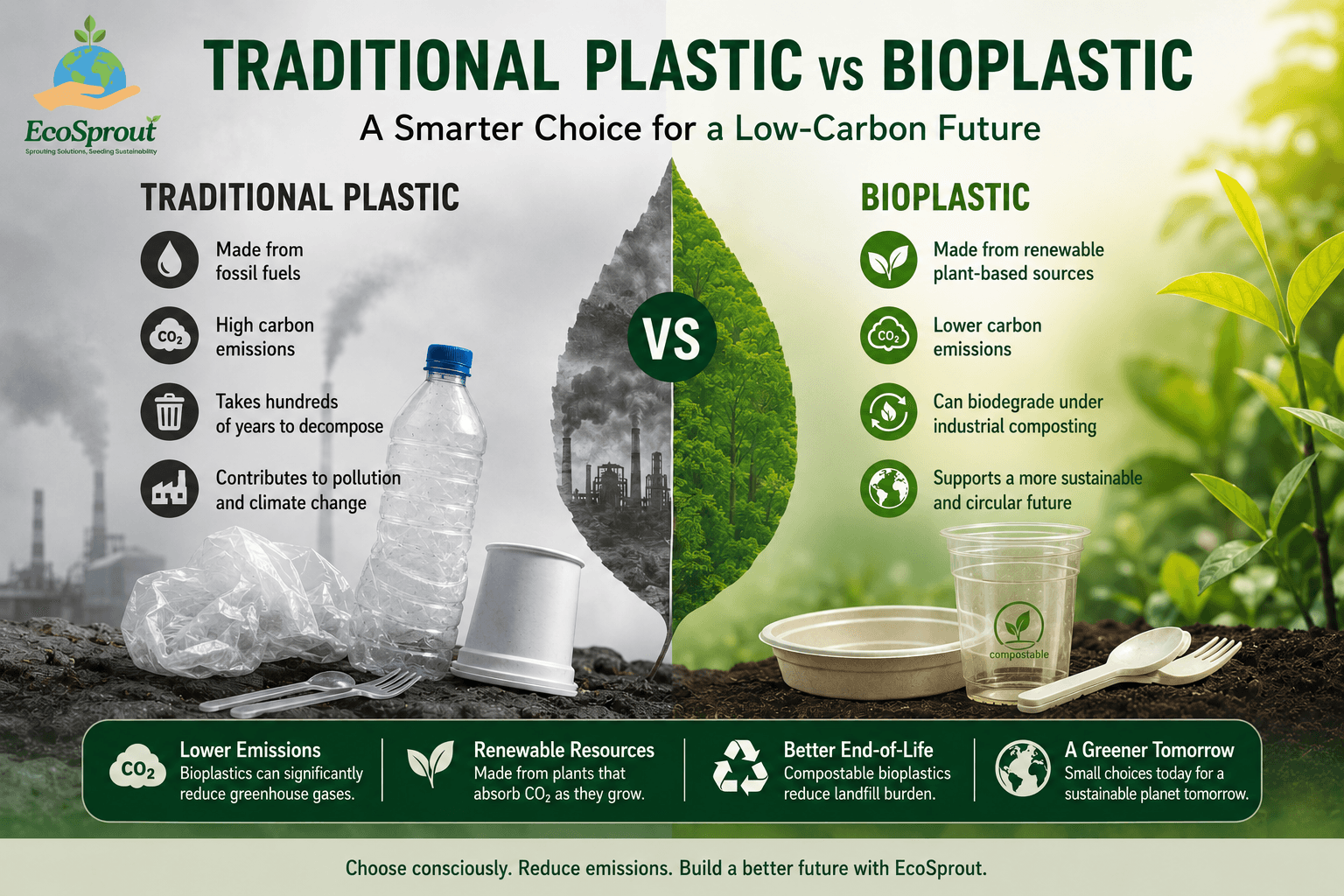
Traditional plastics are made from fossil fuels such as crude oil and natural gas. Through energy-intensive refining and polymerisation processes, these raw materials are converted into plastic products like packaging, bottles, and containers.
Key characteristics:
- Derived from non-renewable fossil fuels
- Highly durable and long-lasting
- Cheap to produce at scale
- Can take hundreds of years to decompose
- Often end up in landfills or oceans
Environmental impact:
Traditional plastics contribute significantly to carbon emissions at every stage of their lifecycle:
- Extraction of fossil fuels releases greenhouse gases
- Manufacturing is energy-intensive
- Incineration or degradation releases CO₂ and toxic byproducts
Because plastic production is tightly linked to fossil fuel consumption, it plays a direct role in increasing global carbon footprints.
What Are Bioplastics?
Bioplastics are a broad category of materials that are either:
- Made from renewable biological sources (like corn starch, sugarcane, or algae), or
- Designed to biodegrade under specific conditions (or both)
Key characteristics:
- Derived partly or fully from renewable resources
- Some are biodegradable or compostable
- Can reduce dependency on fossil fuels
- Performance varies depending on type and application
Important note:
Not all bioplastics are automatically biodegradable, and not all biodegradable plastics break down easily in natural environments. Industrial composting conditions are often required.
Traditional Plastic vs Bioplastic: A Side-by-Side Comparison
| Feature | Traditional Plastic | Bioplastic |
| Raw material | Petroleum-based | Renewable biomass or mixed sources |
| Carbon footprint | High | Much Lower |
| Decomposition time | 100–500+ years | Weeks to months (depending on type) |
| Recyclability | Limited, varies by type | Mostly compostable |
| Toxic emissions | Higher during production & disposal | Lower overall, but depends on processing |
| Cost | Low | Could be higher (but decreasing) |
How Plastics Contribute to Carbon Emissions
Carbon emissions from plastics come from multiple stages of their lifecycle:
1. Extraction and Refining
Fossil fuel extraction releases methane and CO₂. Refining crude oil into plastic feedstock is energy-heavy and contributes significantly to industrial emissions.
2. Manufacturing
Turning raw materials into plastic products requires high heat and chemical processing, both of which rely heavily on fossil fuels.
3. Transportation
Plastic products are manufactured and shipped globally, adding to fuel consumption and emissions.
4. Disposal
- Incineration releases CO₂ and other greenhouse gases
- Landfills generate methane over time
- Environmental breakdown creates microplastics, which persist in ecosystems
Overall, plastics are responsible for a notable share of global greenhouse gas emissions across their lifecycle.
How Bioplastics Help Reduce Carbon Emissions
Bioplastics can play a meaningful role in reducing emissions, but their impact depends on how they are produced, used, and disposed of.
1. Lower fossil fuel dependency
Since many bioplastics are derived from plants, they reduce reliance on petroleum extraction, cutting emissions at the source.
2. Carbon absorption during growth
Plants used in bioplastic production absorb CO₂ as they grow, partially offsetting emissions from manufacturing.
3. Potential for lower lifecycle emissions
When properly managed, bioplastics can generate fewer greenhouse gases compared to conventional plastics over their full lifecycle.
4. Improved end-of-life scenarios
Compostable bioplastics can return organic material to the soil under industrial composting conditions, reducing landfill burden.
However, Bioplastics Are Not a Perfect Solution
While bioplastics are often seen as a greener alternative, they come with challenges:
- Land use concerns: Growing crops for plastics may compete with food production
- Industrial composting requirement: Many bioplastics do not break down in home compost or natural environments
- Recycling system limitations: Mixing bioplastics with conventional recycling can cause contamination
- Energy use still exists: Production still requires energy and processing
This means bioplastics are part of the solution—but not the complete answer.
The Bigger Picture: Reducing Carbon Emissions in Materials
Reducing carbon emissions in the plastics industry requires a multi-layered approach:
1. Material innovation
- Expanding use of bioplastics
- Developing fully compostable and recyclable alternatives
- Improving material efficiency (using less plastic overall)
2. Circular economy systems
- Better recycling infrastructure
- Closed-loop manufacturing systems
- Extended producer responsibility
3. Consumer behaviour change
- Reducing single-use plastic consumption
- Choosing reusable alternatives
- Supporting sustainable brands like EcoSprout
Conclusion
Traditional plastics and bioplastics differ significantly in how they are produced, used, and disposed of—especially when it comes to carbon emissions. While traditional plastics rely heavily on fossil fuels and contribute substantially to greenhouse gas emissions, bioplastics offer a lower-carbon alternative when sourced and managed responsibly.
However, bioplastics are not a silver bullet. The most meaningful environmental impact will come from combining material innovation with reduced consumption, improved recycling systems, and a shift toward circular economy principles.
For EcoSprout, the future lies not just in replacing materials—but in rethinking how materials are used altogether.